
Making Disciples Who Make Disciples
Many churches are good at gathering people and teaching them. Fewer are good at raising up believers who can walk alongside someone else. Here's how to build discipleship that multiplies.
 Inspyrd Team·
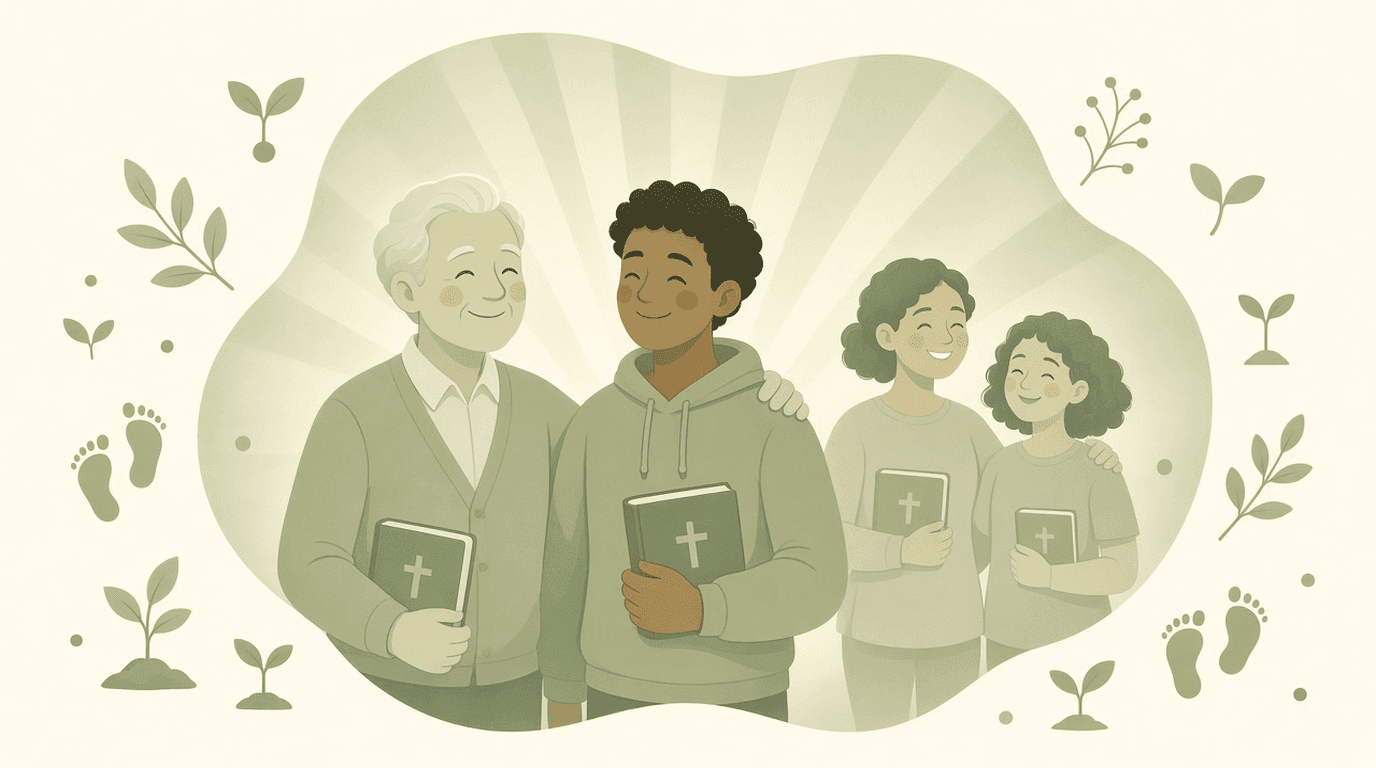
Four Generations in One Verse
"The things which you have heard from me among many witnesses, commit the same to faithful men, who will be able to teach others also." — 2 Timothy 2:2 (WEB)
Read that verse slowly and count the people in it. Paul. Timothy. Faithful men. Others also. Four generations of disciples in a single sentence.
Paul wasn't just telling Timothy to grow. He was telling him to pass it on — and to pass it on to people who would pass it on again. That's the shape of discipleship in the New Testament. It isn't a pipeline that ends with a mature believer sitting in a pew. It's a chain that keeps going.
For a lot of churches, that chain breaks after the second link.
Where the Chain Breaks
Most churches don't lack for teaching. There are sermons every week, classes on the calendar, and studies on the shelf. People learn a great deal. But learning and multiplying aren't the same thing.
Here's where it tends to stall:
Discipleship becomes a program. People complete a class, get a certificate, and consider themselves "discipled." The relationship ends when the curriculum does.
Only the professionals disciple. Members assume discipleship is the pastor's job. Staff are stretched thin, and the number of people who can be personally invested in stays small.
Nobody is asked. Plenty of mature believers would gladly walk alongside someone younger in the faith. They've just never been invited, equipped, or told they're ready.
There's no next step. A new believer grows for a season, but no one ever says, "Now it's your turn to help someone else."
What Jesus Modeled
When Jesus called the twelve, Mark records the purpose plainly: "He appointed twelve, that they might be with him, and that he might send them out to preach" (Mark 3:14, WEB).
Notice the order. With him first. Sent out second.
Jesus didn't hand His disciples a manual. He shared His life with them for roughly three years — meals, travel, ministry, failures, and questions. Then He sent them out with the commission to "make disciples of all nations, ... teaching them to observe all things that I commanded you" (Matthew 28:19-20, WEB).
Paul followed the same pattern. To the Thessalonians he wrote that he had shared "not the Good News of God only, but also our own souls, because you had become very dear to us" (1 Thessalonians 2:8, WEB). Discipleship was never only information. It was life on life.
Building a Culture That Multiplies
1. Redefine Who Is "Qualified"
The most important shift is helping ordinary believers see that they can disciple someone. Not because they know everything, but because they are a step or two further down the road.
Paul's invitation in 1 Corinthians 11:1 is a helpful frame: "Be imitators of me, even as I also am of Christ" (WEB). A disciple-maker doesn't point to themselves as the goal. They point to Jesus and say, "Walk with me while I follow Him."
2. Keep It Small and Relational
Multiplication happens best in small units: one-on-one or groups of three or four. Small enough that people can be honest, ask real questions, and notice when someone is struggling.
A simple structure goes a long way:
- Read a passage of Scripture together
- Talk about what it means and how it applies
- Pray for one another specifically
- Do one concrete thing before the next time you meet
3. Put the End in View From the Start
From the first meeting, make it clear that the goal isn't just your own growth — it's that one day you'll do this with someone else. That single expectation changes how people engage. They pay attention differently when they know they'll be passing it on.
4. Equip, Then Release
Give disciple-makers simple tools, not a three-ring binder. A short reading plan. A handful of good questions. A basic rhythm for meeting. Then trust them.
Church leaders can support this by:
- Hosting a short training on how to walk with someone one-on-one
- Pairing first-time disciple-makers with someone more experienced
- Checking in regularly to encourage and answer questions
- Celebrating stories of multiplication publicly
5. Measure What Matters
Most churches count attendance and giving. Few count how many people are actively discipling someone else. You don't need a complicated dashboard. Just start asking the question in leadership meetings: "Who is investing in whom?" What gets talked about gets prioritized.
Common Objections
"I don't know enough."
You know more than you think. If you've walked with Jesus for a few years, you have something to share with someone who's just starting. And you can learn alongside them — some of the best discipleship relationships involve two people discovering something in Scripture together.
"I don't have time."
Discipleship doesn't have to mean a new weekly commitment. It can fit into rhythms you already have: a standing coffee, a walk, a lunch break, a message thread during the week. Jesus discipled people while traveling, eating, and working.
"What if I mess it up?"
You will, at some point. So did Peter, and Jesus still built His church on that kind of follower. Honesty about your own failures may be one of the most valuable things you pass on.
Start With One
You don't need to launch a churchwide initiative to begin. If you're a church leader, identify one or two mature believers and ask them to invest in someone. If you're a member, think of one person a few steps behind you in faith and invite them to read Scripture with you for the next month.
One becomes two. Two become four. That's how the gospel has moved for two thousand years — not through programs, but through faithful people who taught others also.
Inspyrd is being built to support this kind of relational discipleship — a place for small groups and one-on-one relationships to read, talk, and pray together between meetings. Join the waitlist to follow what we're building.
Join the Inspyrd community
Be among the first to experience a new way for your church to connect, study, and grow together.